Chapter 5 NBA Analytics
Here, I investigate different teams in the NBA by looking at their stats for the regular season.
5.1 Loading and Preparing the Data
library(readxl)
team <- read_excel("data/NBA Team Total Data 2024-2025.xlsx", sheet = 18)
head(team)
## # A tibble: 6 × 30
## Rk Player Age G GS MP FG FGA `FG%` `3P` `3PA` `3P%`
## <dbl> <chr> <dbl> <dbl> <dbl> <dbl> <dbl> <dbl> <dbl> <dbl> <dbl> <dbl>
## 1 1 Austin… 26 73 73 2550 477 1037 0.46 200 531 0.377
## 2 2 LeBron… 40 70 70 2444 651 1270 0.513 149 396 0.376
## 3 3 Rui Ha… 26 59 57 1869 293 576 0.509 102 247 0.413
## 4 4 Gabe V… 28 72 11 1527 168 420 0.4 109 309 0.353
## 5 5 Dalton… 23 78 16 1494 257 557 0.461 128 340 0.376
## 6 6 Anthon… 31 42 42 1440 400 758 0.528 28 94 0.298
## # ℹ 18 more variables: `2P` <dbl>, `2PA` <dbl>, `2P%` <dbl>, `eFG%` <dbl>,
## # FT <dbl>, FTA <dbl>, `FT%` <dbl>, ORB <dbl>, DRB <dbl>, TRB <dbl>,
## # AST <dbl>, STL <dbl>, BLK <dbl>, TOV <dbl>, PF <dbl>, PTS <dbl>,
## # `Trp-Dbl` <dbl>, Awards <chr>library(tidyverse)
team <- team %>%
mutate(
Team = "Lakers",
Won_award = ifelse(is.na(Awards), "0", "1")
)
head(team)## # A tibble: 6 × 32
## Rk Player Age G GS MP FG FGA `FG%` `3P` `3PA` `3P%`
## <dbl> <chr> <dbl> <dbl> <dbl> <dbl> <dbl> <dbl> <dbl> <dbl> <dbl> <dbl>
## 1 1 Austin… 26 73 73 2550 477 1037 0.46 200 531 0.377
## 2 2 LeBron… 40 70 70 2444 651 1270 0.513 149 396 0.376
## 3 3 Rui Ha… 26 59 57 1869 293 576 0.509 102 247 0.413
## 4 4 Gabe V… 28 72 11 1527 168 420 0.4 109 309 0.353
## 5 5 Dalton… 23 78 16 1494 257 557 0.461 128 340 0.376
## 6 6 Anthon… 31 42 42 1440 400 758 0.528 28 94 0.298
## # ℹ 20 more variables: `2P` <dbl>, `2PA` <dbl>, `2P%` <dbl>, `eFG%` <dbl>,
## # FT <dbl>, FTA <dbl>, `FT%` <dbl>, ORB <dbl>, DRB <dbl>, TRB <dbl>,
## # AST <dbl>, STL <dbl>, BLK <dbl>, TOV <dbl>, PF <dbl>, PTS <dbl>,
## # `Trp-Dbl` <dbl>, Awards <chr>, Team <chr>, Won_award <chr>library(tidyverse)
team_stat <- team %>% mutate(
PRA=PTS+TRB+AST,
STOCKS=STL+BLK) %>% dplyr::select("MP", "PRA", "STOCKS")
head(team_stat)## # A tibble: 6 × 3
## MP PRA STOCKS
## <dbl> <dbl> <dbl>
## 1 2550 2225 103
## 2 2444 2831 109
## 3 1869 1153 71
## 4 1527 650 64
## 5 1494 988 32
## 6 1440 1721 1445.2 Creating a function
all_nba <- function(x){
  team_inside <- read_excel("data/NBA Team Total Data 2024-2025.xlsx", sheet = x)
  team_inside <- team_inside %>%
  mutate(
    Team = x,
    Won_award = ifelse(is.na(Awards), "0", "1"),
    PRA=PTS+TRB+AST,
    STOCKS=STL+BLK)
  print(team_inside)
}library(readxl)
team_info <- excel_sheets("data/NBA Team Total Data 2024-2025.xlsx")
head(team_info)## [1] "Nets" "Knicks" "Raptors" "Philly"
## [5] "Celtics" "Timberwolves"## # A tibble: 6 × 35
## Rk Player Age G GS MP FG FGA `FG%` `3P` `3PA` `3P%`
## <dbl> <chr> <dbl> <dbl> <dbl> <dbl> <dbl> <dbl> <dbl> <dbl> <dbl> <dbl>
## 1 1 Jalen … 24 79 22 2031 246 620 0.397 122 362 0.337
## 2 2 Keon J… 22 79 56 1925 303 779 0.389 126 401 0.314
## 3 3 Nic Cl… 25 70 62 1882 320 568 0.563 5 21 0.238
## 4 4 Camero… 28 57 57 1800 355 747 0.475 159 408 0.39
## 5 5 Ziaire… 23 63 45 1541 214 520 0.412 103 302 0.341
## 6 6 Tyrese… 25 60 11 1315 189 465 0.406 99 282 0.351
## # ℹ 23 more variables: `2P` <dbl>, `2PA` <dbl>, `2P%` <dbl>, `eFG%` <dbl>,
## # FT <dbl>, FTA <dbl>, `FT%` <dbl>, ORB <dbl>, DRB <dbl>, TRB <dbl>,
## # AST <dbl>, STL <dbl>, BLK <dbl>, TOV <dbl>, PF <dbl>, PTS <dbl>,
## # `Trp-Dbl` <dbl>, Awards <chr>, Team <chr>, Won_award <chr>, PRA <dbl>,
## # STOCKS <dbl>, Pos <chr>5.3 Adding Conference Information
## # A tibble: 6 × 2
##   Team    Conference
##   <chr>   <chr>
## 1 Nets    East
## 2 Knicks  East
## 3 Raptors East
## 4 Philly  East
## 5 Celtics East
## 6 Bulls East5.4 Visual Exploration
ggplot(all_stats, aes(x = PRA, y = STOCKS, color = Conference)) +
  geom_point(alpha = 0.7) +
  labs(
    title = "PRA vs. STOCKS by Conference",
    x = "Points + Rebounds + Assists (PRA)",
    y = "Steals + Blocks (STOCKS)",
    color = "Conference"
  ) +
  theme_minimal()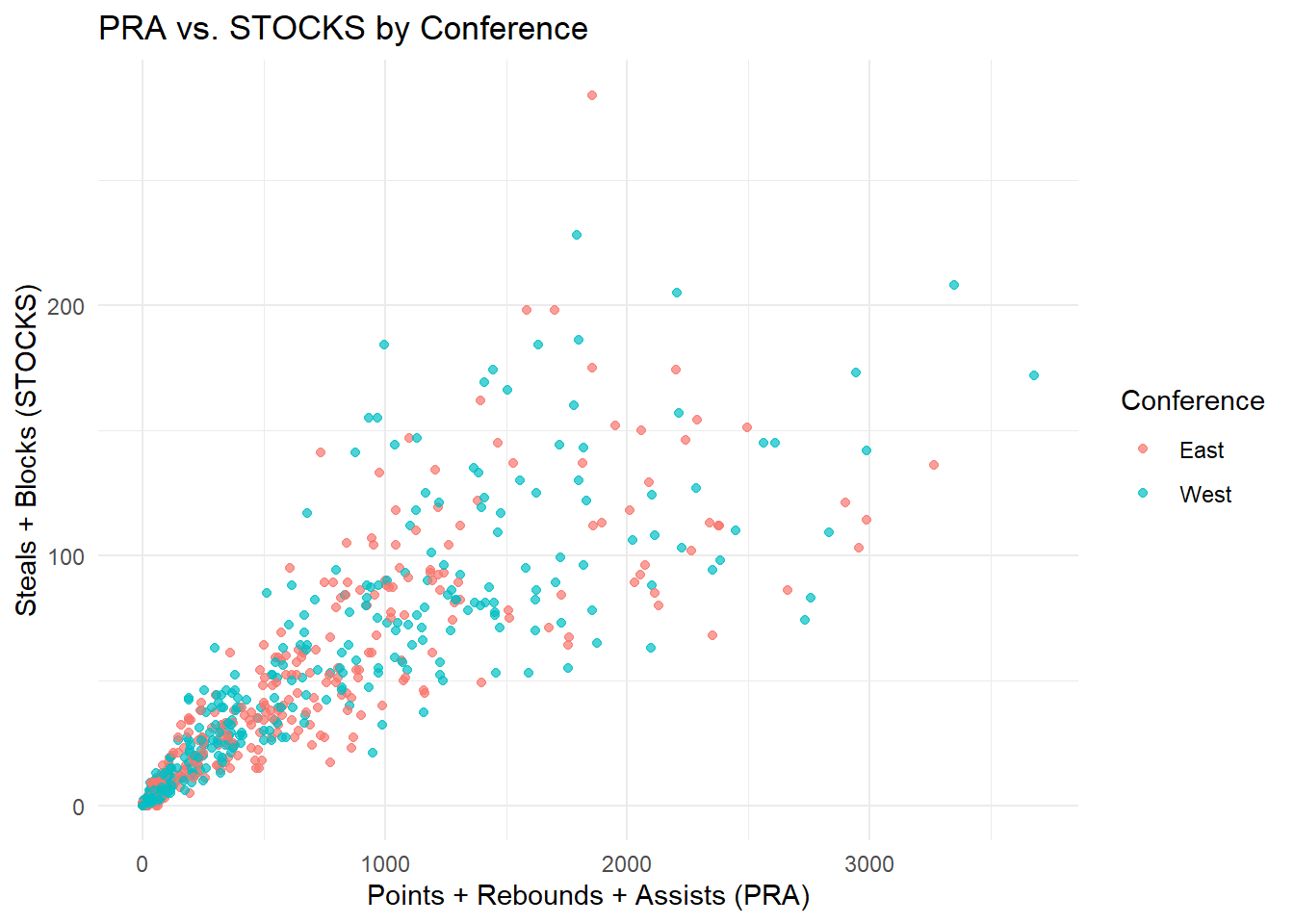
Figure 5.1: This graph shows PRA and STOCKS stats from eastern and western conference teams.
ggplot(all_stats, aes(x = PRA, fill = Conference)) +
  geom_histogram(position = "identity", alpha = 0.5, bins = 30) +
  labs(
    title = "Distribution of PRA by Conference",
    x = "PRA",
    y = "Count of Players",
    fill = "Conference"
  ) +
  theme_minimal()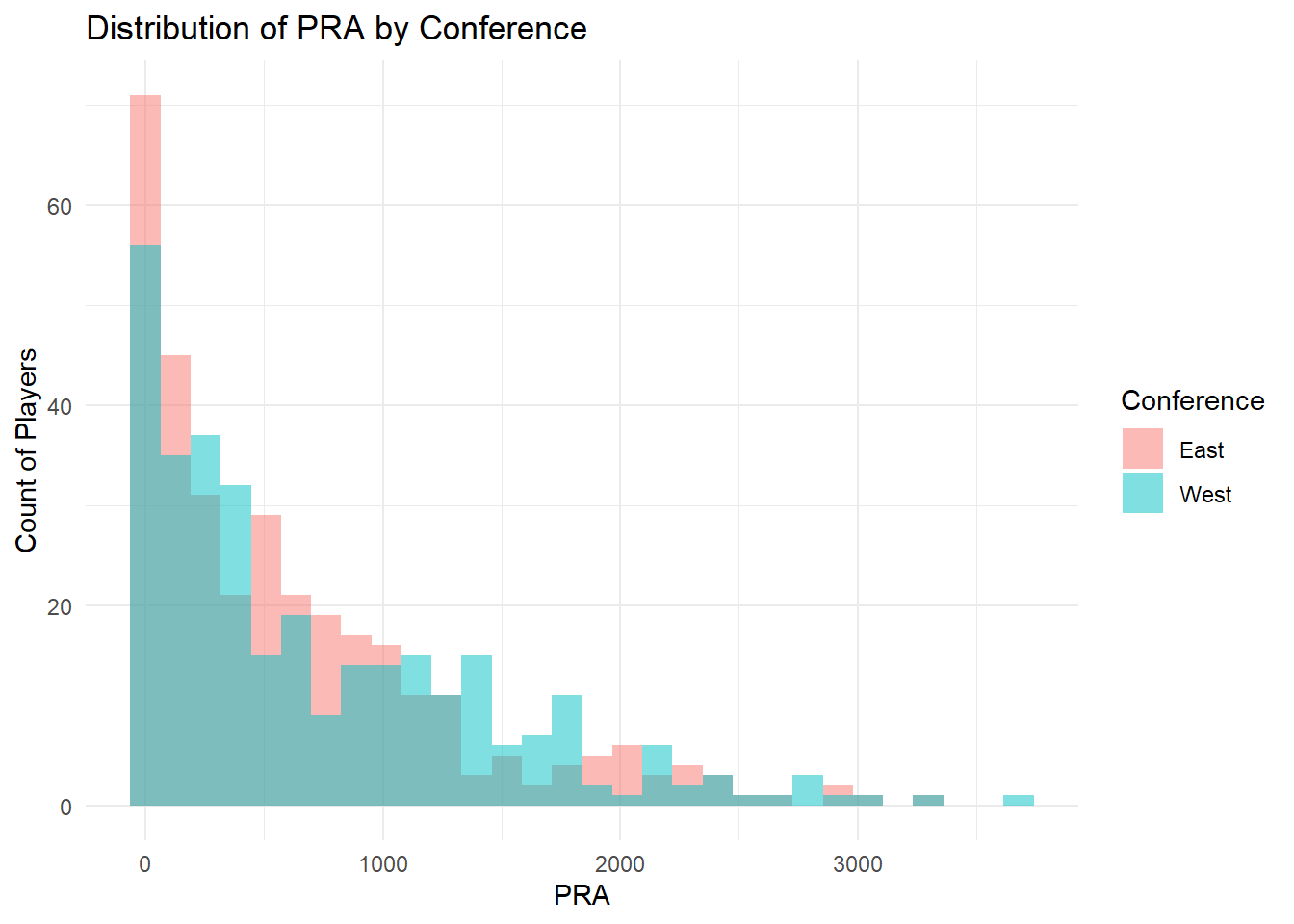
Figure 5.2: This graph shows players’ PRA by eastern and western conference.
5.5 Correlation Analysis
##
##  Pearson's product-moment correlation
##
## data:  x and y
## t = -2.094, df = 650, p-value = 0.03665
## alternative hypothesis: true correlation is not equal to 0
## 95 percent confidence interval:
##  -0.157650363 -0.005105577
## sample estimates:
##         cor
## -0.08185737##
## Pearson's product-moment correlation
##
## data: x and y
## t = -1.8195, df = 650, p-value = 0.0693
## alternative hypothesis: true correlation is not equal to 0
## 95 percent confidence interval:
## -0.147164250 0.005629906
## sample estimates:
## cor
## -0.07118475library(ggcorrplot)
vars <- all_stats %>% dplyr::select("Age", "PRA", "STOCKS")
cm <- round(cor(vars, use = "pairwise.complete.obs"), 3)
ggcorrplot(cm, lab = TRUE, hc.order = FALSE, type = "lower")## Warning: `aes_string()` was deprecated in ggplot2 3.0.0.
## ℹ Please use tidy evaluation idioms with `aes()`.
## ℹ See also `vignette("ggplot2-in-packages")` for more information.
## ℹ The deprecated feature was likely used in the ggcorrplot package.
## Please report the issue at
## <https://github.com/kassambara/ggcorrplot/issues>.
## This warning is displayed once every 8 hours.
## Call `lifecycle::last_lifecycle_warnings()` to see where this warning was
## generated.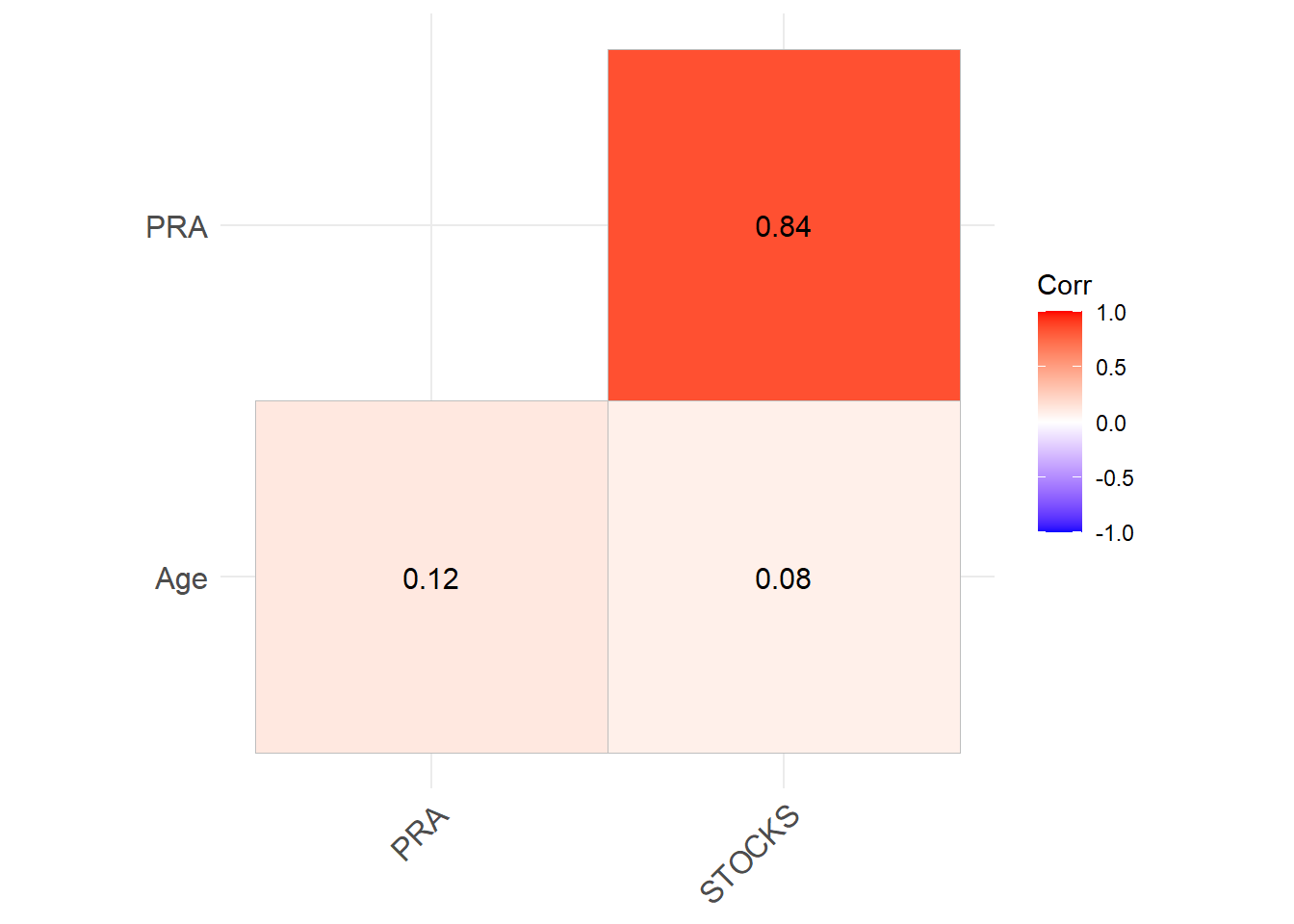
## Loading required package: MASS##
## Attaching package: 'MASS'## The following object is masked from 'package:dplyr':
##
## select## [1] "Rk" "Player" "Age"
## [4] "G" "GS" "MP"
## [7] "FG" "FGA" "FG%"
## [10] "3P" "3PA" "3P%"
## [13] "2P" "2PA" "2P%"
## [16] "eFG%" "FT" "FTA"
## [19] "FT%" "ORB" "DRB"
## [22] "TRB" "AST" "STL"
## [25] "BLK" "TOV" "PF"
## [28] "PTS" "Trp-Dbl" "Awards"
## [31] "Team" "Won_award" "PRA"
## [34] "STOCKS" "Pos" "Conference"
## [37] "Conference_binary"## estimate p.value statistic n gp Method
## 1 0.8395996 3.657553e-174 39.37587 652 1 pearson